
Blended learning combines face to face learning and online learning. The traditional classroom mixed with a technology based approach to learning.
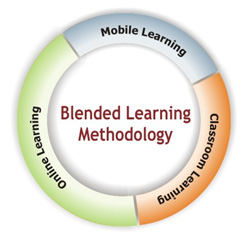
The online environment can be synchronous. It can also be asynchronous, which can be perfect for the adult learner and in particular the nurse working shifts. High quality online learning environments provide interactions and engagement with knowledge, learning resources, teachers and peers.
The online learning can provide a ‘flipped classroom’ approach to really enhance the face to face time.
Add a discussion forum for learners. This forum will allow them to engage, question, discuss, and share resources in the online platform. This can create a learning community. To build confidence, set some basic netiquette rules. As the facilitator, judge when discussion can be developed. Alternatively, decide when to sit back and allow the discussion to take the learning into new areas.
When to use?
Consider how education is delivered. Decide what is the best approach to deliver, face to face, fully online or blended learning.
Consider Your Learners
- Relies on self-directed learners.
- Are they comfortable with the technology being utilised?
- E-learning approach can be new for some learners and they may resist and disengage.
- Does it meet their learning needs?
The technology approach for online education will commonly utilise a learning management system. Take a look at this critique of LMS by Leigh Blackall.
Remember to consider your change management strategy as you develop the delivery of education. Changing methods may really challenge traditionalists (students and educators). In nursing, there are numerous skills and specialities to learn. Offering one standardised educational approach may not be the most effective way to deliver education.
References
Bergmann, J., & Sams, A. (2012). Flip your classroom: Reach every student in every class every day. International Society for Technology in Education.
Bower, M., Kenney, J., Dalgarno, B., Lee, M. J., & Kennedy, G. E. (2013). Blended synchronous learning: Patterns and principles for simultaneously engaging co-located and distributed learners. In Electric dreams. Proceedings of the 30th ASCILITE Conference (pp. 92-102).
Bradshaw, M., & Lowenstein, A. (2013). Innovative teaching strategies in nursing and related health professions. Jones & Bartlett Publishers.
Garrison, D. R., & Kanuka, H. (2004). Blended learning: Uncovering its transformative potential in higher education. The Internet and Higher Education, 7(2), 95-105.
Tucker, B. (2012). The flipped classroom. Education Next, 12(1), 82-83.
 Nursing Education Network
Leave a Reply